

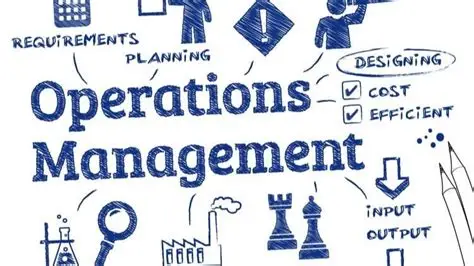
The Operations Management Process is the backbone of every successful business. Whether a company produces physical goods or delivers services, operations management ensures that resources are used efficiently, costs are controlled, and customer expectations are met.
For beginners, understanding the Operations Management Process may seem complex at first. However, when broken down into clear steps, it becomes a logical and practical system that any organization can apply.
This guide explains the Operations Management Process step by step, using simple language and practical examples.
What Is the Operations Management Process?
The Operations Management Process refers to the structured set of activities used to design, plan, control, and improve business operations. It focuses on transforming inputs (such as materials, labor, and technology) into outputs (products or services) in the most efficient and effective way.
In simple terms:
Inputs → Transformation Process → Outputs
The goal is to deliver high-quality products or services at the right time and cost while maximizing customer satisfaction and profitability.
Why the Operations Management Process Is Important
Understanding the Operations Management Process helps businesses:
- Improve productivity
- Reduce operational costs
- Maintain consistent quality
- Optimize resource utilization
- Increase customer satisfaction
- Gain competitive advantage
Without a structured operations process, businesses face delays, waste, inefficiencies, and poor customer experiences.

Step-by-Step Operations Management Process
Let’s break down the Operations Management Process into clear, manageable steps.
Step 1: Define Business Objectives
Every successful Operations Management Process starts with clear goals.
Before planning operations, managers must answer:
- What products or services are we offering?
- Who is our target customer?
- What quality standards must we meet?
- What cost targets are we aiming for?
For example, a fast-food restaurant may define objectives such as:
- Serve customers within 5 minutes
- Maintain consistent food quality
- Minimize ingredient waste
Clear objectives guide all operational decisions.
Step 2: Forecast Demand
Demand forecasting is a critical part of the Operations Management Process. Businesses must estimate how much customers will buy.
Common forecasting methods include:
- Historical sales analysis
- Market research
- Trend analysis
- Seasonal forecasting
Accurate forecasting helps businesses avoid:
- Overstocking (which increases storage costs)
- Understocking (which causes lost sales)
For example, retailers increase inventory before holiday seasons based on forecasted demand.
Step 3: Plan Capacity
Capacity planning ensures that a company has enough resources to meet demand.
Capacity includes:
- Workforce
- Machinery
- Equipment
- Production space
- Technology
If demand increases, businesses may need to:
- Hire more staff
- Add new machines
- Increase working hours
If demand decreases, they may reduce shifts or optimize resources.
Effective capacity planning prevents bottlenecks and idle resources.
Step 4: Design the Process
Process design defines how work is done. It is a core part of the Operations Management Process.
Managers decide:
- The sequence of tasks
- Workflow structure
- Equipment layout
- Technology use
There are different process types:
- Job Process – Customized production (e.g., tailor-made furniture)
- Batch Process – Producing in groups (e.g., bakery items)
- Mass Production – Large-scale standardized products (e.g., automobiles)
- Continuous Process – Non-stop production (e.g., oil refining)
A well-designed process improves speed, efficiency, and quality.
Step 5: Manage Inventory
Inventory management ensures that materials and products are available when needed without excess storage.
There are three main types of inventory:
- Raw materials
- Work-in-progress
- Finished goods
Common inventory techniques include:
- Just-In-Time (JIT)
- Economic Order Quantity (EOQ)
- ABC analysis
Proper inventory management reduces holding costs and prevents stockouts.
Step 6: Schedule Operations
Scheduling determines when and how tasks are performed.
It answers:
- Who will do the work?
- When will the work be done?
- In what order will tasks be completed?
Good scheduling:
- Reduces delays
- Maximizes resource use
- Improves on-time delivery
For example, a hospital schedules doctors and nurses to ensure continuous patient care.
Step 7: Ensure Quality Control
Quality control is essential in the Operations Management Process.
Businesses must maintain consistent standards to satisfy customers and avoid defects.
Quality control methods include:
- Inspections
- Statistical process control
- Six Sigma
- Total Quality Management (TQM)
The goal is to identify and fix problems early rather than after products reach customers.
High quality increases brand reputation and customer loyalty.
Step 8: Monitor Performance
Performance measurement helps businesses track whether operations are meeting goals.
Key Performance Indicators (KPIs) in operations management include:
- Productivity rates
- Cost per unit
- Cycle time
- Defect rate
- Customer satisfaction
Regular monitoring allows managers to detect inefficiencies and take corrective action.
Data-driven decisions improve overall operational performance.
Step 9: Improve Continuously
Continuous improvement is the final step in the Operations Management Process, but it never truly ends.
Popular improvement approaches include:
- Lean Management
- Kaizen
- Six Sigma
- Business Process Reengineering
Continuous improvement focuses on:
- Eliminating waste
- Reducing costs
- Increasing speed
- Enhancing quality
Small improvements over time lead to major operational success.
Key Components of the Operations Management Process
To better understand the Operations Management Process, let’s look at its core components.
1. Inputs
- Labor
- Materials
- Capital
- Information
- Technology
2. Transformation Process
- Manufacturing
- Assembly
- Service delivery
- Testing
- Packaging
3. Outputs
- Finished goods
- Services
- Customer satisfaction
- Revenue
Efficient transformation is the primary responsibility of operations managers.
Real-World Example of the Operations Management Process
Let’s consider a simple example: a coffee shop.
- Define objectives – Serve high-quality coffee quickly.
- Forecast demand – Estimate peak hours.
- Plan capacity – Schedule more staff in the morning.
- Design process – Standardize coffee-making steps.
- Manage inventory – Maintain adequate coffee beans and milk.
- Schedule operations – Assign baristas to stations.
- Ensure quality – Maintain consistent taste.
- Monitor performance – Track daily sales and customer feedback.
- Improve continuously – Introduce faster equipment or better recipes.
Even small businesses follow the Operations Management Process, whether formally or informally.

Common Challenges in the Operations Management Process
Beginners should be aware of potential challenges:
- Demand uncertainty
- Supply chain disruptions
- Rising operational costs
- Equipment breakdown
- Quality issues
- Labor shortages
Effective planning and monitoring help reduce these risks.
Skills Required for Effective Operations Management
To successfully manage the Operations Management Process, professionals need:
- Analytical thinking
- Problem-solving skills
- Leadership abilities
- Communication skills
- Decision-making capability
- Knowledge of technology
Modern operations management also relies heavily on data analytics and automation tools.
Benefits of a Strong Operations Management Process
Organizations that implement an effective Operations Management Process experience:
- Higher efficiency
- Lower operational costs
- Improved product quality
- Faster delivery times
- Better customer satisfaction
- Increased profitability
Strong operations management creates a competitive advantage in today’s dynamic business environment.
Final Thoughts
The Operations Management Process is a structured, step-by-step approach that transforms resources into valuable products and services. For beginners, the key is understanding that operations management is not just about production — it is about planning, organizing, controlling, and continuously improving business activities.
By following these steps:
- Define objectives
- Forecast demand
- Plan capacity
- Design processes
- Manage inventory
- Schedule operations
- Control quality
- Monitor performance
- Improve continuously
Any organization — large or small — can build an efficient and sustainable operational system.
Mastering the Operations Management Process helps businesses reduce waste, increase efficiency, and deliver greater value to customers. And in today’s competitive market, efficient operations are not optional — they are essential for long-term success.