

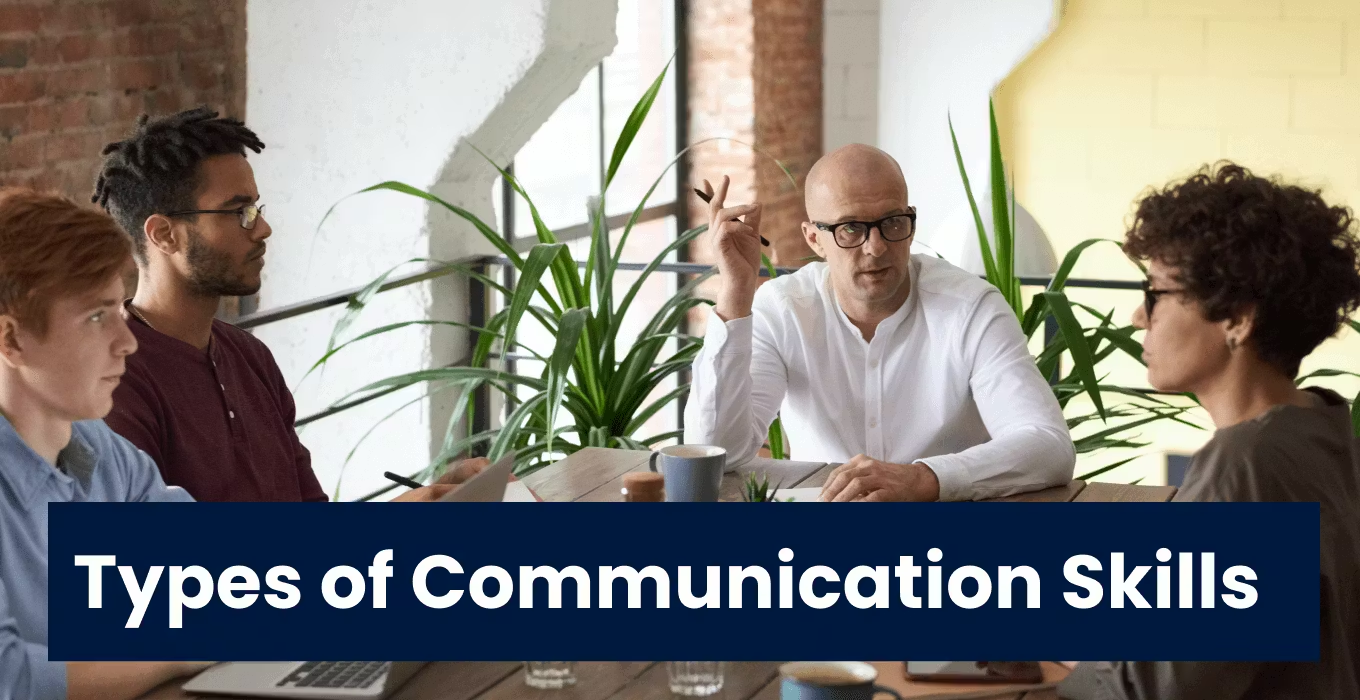
In today’s fast-paced and interconnected world, success depends not only on knowledge and technical ability but also on how well we communicate. Whether in personal relationships, education, or the workplace, communication skills play a crucial role in shaping outcomes. People with strong communication skills can express ideas clearly, build trust, resolve conflicts, and achieve their goals more effectively.
Effective communication is not an inborn talent—it is a skill that can be learned, practiced, and improved over time. This article explores the meaning of communication skills, their importance in personal and professional life, and practical ways to improve them for long-term success.
Understanding Communication Skills
Communication skills refer to the ability to convey information, ideas, thoughts, and emotions clearly and effectively to others. They involve not only speaking and writing but also listening, observing, and understanding non-verbal cues.
Effective communication is a two-way process. It requires both the sender and the receiver to understand the message in the same way. When communication skills are weak, misunderstandings, conflicts, and inefficiencies often arise.
Types of Communication Skills
To improve communication, it is important to understand its different forms. Each type plays a vital role in personal and professional success.
Verbal Communication Skills
Verbal communication involves spoken words used in conversations, meetings, interviews, and presentations. Clear pronunciation, appropriate tone, and confidence are key elements of strong verbal communication skills.
Good verbal communication helps in:
- Expressing ideas clearly
- Persuading and influencing others
- Building confidence and leadership presence
Non-Verbal Communication Skills
Non-verbal communication includes body language, facial expressions, eye contact, posture, and gestures. Often, non-verbal signals communicate more than words.
Effective non-verbal communication skills help:
- Reinforce spoken messages
- Show confidence and attentiveness
- Build trust and rapport
Written Communication Skills
Written communication involves emails, reports, messages, proposals, and documents. Clear structure, simple language, and correct grammar are essential.
Strong written communication skills ensure:
- Professionalism
- Accuracy and clarity
- Reduced confusion and errors
Listening Skills
Listening is one of the most important but often overlooked communication skills. Active listening means fully focusing on the speaker, understanding the message, and responding thoughtfully.
Good listening skills help:
- Avoid misunderstandings
- Build stronger relationships
- Improve problem-solving
Importance of Communication Skills in Personal Life
Effective communication skills are essential for maintaining healthy personal relationships. They help individuals express emotions, understand others, and resolve conflicts peacefully.
In personal life, strong communication skills:
- Improve relationships with family and friends
- Encourage empathy and emotional understanding
- Reduce conflicts and misunderstandings
- Build self-confidence
People who communicate openly and respectfully are more likely to develop strong emotional connections and long-lasting relationships.
Importance of Communication Skills in Professional Life
In the workplace, communication skills are directly linked to performance, productivity, and career growth. Employers highly value employees who can communicate clearly and work well with others.
Professional success depends on communication skills in areas such as:
- Team collaboration
- Leadership and management
- Client interaction
- Negotiation and decision-making
Employees with strong communication skills are often seen as more reliable, confident, and capable of handling responsibilities.
Communication Skills and Career Growth
Effective communication skills can significantly impact career advancement. Professionals who communicate clearly are better at presenting ideas, handling feedback, and building professional networks.
Strong communication skills help professionals:
- Perform better in interviews
- Deliver effective presentations
- Build leadership potential
- Handle workplace conflicts professionally
Many leadership roles require excellent communication skills, as leaders must motivate teams, explain goals, and provide clear direction.
Common Barriers to Effective Communication
Despite its importance, communication often fails due to common barriers. Identifying these barriers is the first step toward improvement.
Some common communication barriers include:
- Poor listening habits
- Lack of clarity or structure
- Emotional reactions or assumptions
- Cultural and language differences
- Distractions and lack of attention
Improving communication skills involves recognizing and addressing these obstacles.
How to Improve Communication Skills
Communication skills can be improved with consistent effort and practice. Below are practical strategies to enhance both personal and professional communication.
Improve Active Listening
Active listening is the foundation of effective communication skills. It involves giving full attention to the speaker and avoiding interruptions.
Tips to improve listening skills:
- Maintain eye contact
- Avoid distractions
- Ask relevant questions
- Summarize key points
When people feel heard, communication becomes more meaningful and productive.
Use Clear and Simple Language
Using complex words or unclear sentences can create confusion. Effective communication skills require clarity and simplicity.
To communicate clearly:
- Organize thoughts before speaking
- Use simple and direct language
- Avoid unnecessary jargon
- Stay focused on the main message
Clear communication saves time and prevents misunderstandings.
Develop Confidence in Speaking
Confidence plays a major role in communication skills. Speaking confidently helps others trust and understand your message.
Ways to improve confidence:
- Practice speaking regularly
- Prepare before presentations or meetings
- Focus on posture and tone
- Accept mistakes as part of learning
Confidence grows with experience and self-awareness.
Improve Non-Verbal Communication
Non-verbal communication strongly influences how messages are received. Positive body language supports effective communication skills.
Key non-verbal tips include:
- Maintain appropriate eye contact
- Use open and relaxed posture
- Avoid negative gestures
- Match facial expressions with words
Being aware of body language improves overall communication effectiveness.
Enhance Written Communication Skills
Written communication is essential in academic and professional settings. Improving writing skills enhances clarity and professionalism.
To improve written communication skills:
- Use short and clear sentences
- Structure content logically
- Proofread for errors
- Adapt tone to the audience
Good writing reflects clear thinking and attention to detail.
Practice Emotional Intelligence
Emotional intelligence strengthens communication skills by helping individuals understand and manage emotions.
High emotional intelligence allows people to:
- Communicate calmly under pressure
- Show empathy and respect
- Handle criticism constructively
- Resolve conflicts effectively
Understanding emotions improves both personal and professional interactions.
Communication Skills in Leadership and Teamwork
Leadership success depends heavily on communication skills. Leaders must communicate vision, expectations, and feedback clearly to guide teams.
Effective communication skills help leaders:
- Inspire and motivate employees
- Build trust and transparency
- Encourage collaboration
- Improve team performance
In teamwork, clear communication ensures that everyone understands roles, responsibilities, and goals.
Communication Skills in the Digital Age
With the rise of digital communication, communication skills have become more important than ever. Emails, video calls, and online messaging require clarity and professionalism.
Digital communication skills include:
- Writing clear and polite emails
- Using appropriate tone in messages
- Being concise in virtual meetings
- Listening actively during online discussions
Strong communication skills help prevent misinterpretation in digital environments.
Measuring Improvement in Communication Skills
Improving communication skills is an ongoing process. Progress can be measured through feedback and self-reflection.
Ways to assess communication skills:
- Ask for feedback from peers or mentors
- Observe responses from others
- Reflect on past interactions
- Track improvement in confidence and clarity
Continuous improvement leads to long-term success.
Challenges in Developing Communication Skills
While improving communication skills is possible, challenges may arise, such as:
- Fear of public speaking
- Language barriers
- Low self-confidence
- Limited practice opportunities
Overcoming these challenges requires patience, practice, and a willingness to learn.
Conclusion
Effective communication skills are essential for personal and professional success. They influence how people connect, collaborate, and achieve their goals. From building strong relationships to advancing careers, communication skills play a central role in every aspect of life.
By improving listening, speaking, writing, and non-verbal communication, individuals can enhance clarity, confidence, and understanding. Communication skills are not just tools for success—they are lifelong assets that support growth, leadership, and meaningful connections.
In a world where clear communication sets individuals apart, investing in communication skills is one of the most valuable decisions a person can make.