

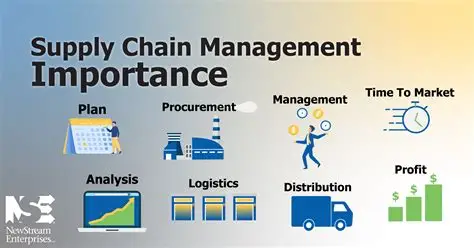
In today’s fast-paced and highly competitive business environment, companies must operate with precision, speed, and cost-effectiveness. One of the most critical areas that determine success is the supply chain. Businesses that understand how to improve supply chain efficiency can reduce costs, enhance customer satisfaction, and gain a strong competitive advantage.
Supply chain efficiency is not just about moving goods faster—it involves optimizing every step, from sourcing raw materials to delivering products to customers. This article provides practical, proven logistics and operations tips to help organizations streamline their supply chains and achieve better performance.
What Is Supply Chain Efficiency?
Supply chain efficiency refers to the ability to deliver products to customers in the most cost-effective and timely manner while maintaining high quality. An efficient supply chain minimizes waste, reduces delays, and ensures smooth coordination between all stakeholders.
Key components include:
- Procurement and sourcing
- Production and operations
- Inventory management
- Transportation and logistics
- Distribution and delivery
Understanding these elements is the first step in learning how to improve supply chain efficiency.
Why Supply Chain Efficiency Matters
Improving supply chain efficiency has a direct impact on business performance. Companies that optimize their operations can:
- Reduce operational costs
- Improve delivery speed
- Enhance customer satisfaction
- Increase profitability
- Respond quickly to market changes
In contrast, inefficient supply chains lead to delays, higher costs, and lost opportunities.
Proven Tips on How to Improve Supply Chain Efficiency
1. Enhance Demand Forecasting
Accurate demand forecasting is essential for efficient supply chain management. Without it, businesses risk overstocking or running out of products.
To improve forecasting:
- Use historical sales data
- Apply predictive analytics tools
- Monitor market trends and customer behavior
Better forecasting ensures that inventory levels match actual demand, reducing waste and improving efficiency.
2. Optimize Inventory Management
Inventory is one of the biggest cost drivers in any supply chain. Managing it effectively is key to improving efficiency.
Best practices include:
- Implementing inventory tracking systems
- Maintaining optimal stock levels
- Using techniques like economic order quantity (EOQ)
- Regularly auditing inventory
Efficient inventory management reduces storage costs and prevents stockouts or excess inventory.
3. Strengthen Supplier Relationships
Suppliers play a critical role in supply chain performance. Strong relationships lead to better communication, reliability, and collaboration.
To build stronger partnerships:
- Communicate clearly and regularly
- Share demand forecasts
- Evaluate supplier performance
- Develop long-term agreements
Reliable suppliers help ensure consistent quality and timely delivery, which improves overall efficiency.
4. Streamline Logistics and Transportation
Transportation is a major component of supply chain costs. Optimizing logistics can significantly improve efficiency.
Key strategies include:
- Consolidating shipments
- Choosing cost-effective transportation modes
- Optimizing delivery routes
- Partnering with reliable logistics providers
Efficient logistics reduce delivery times and lower transportation expenses.
5. Leverage Technology and Automation
Technology plays a vital role in modern supply chains. Businesses that invest in digital tools can significantly enhance efficiency.
Important technologies include:
- Warehouse management systems (WMS)
- Transportation management systems (TMS)
- Enterprise resource planning (ERP) software
- Automation and robotics
These tools help reduce manual errors, improve accuracy, and speed up operations.
6. Improve Warehouse Operations
Warehouses are central to supply chain efficiency. Poor warehouse management can lead to delays and increased costs.
Ways to improve warehouse efficiency:
- Optimize layout for faster picking and packing
- Use barcode or RFID systems
- Implement automation where possible
- Train staff regularly
Efficient warehouse operations ensure faster order processing and accurate deliveries.
7. Increase Supply Chain Visibility
Visibility allows businesses to track products and operations in real time. This helps identify issues early and make informed decisions.
To improve visibility:
- Use real-time tracking systems
- Integrate supply chain data platforms
- Monitor key performance indicators (KPIs)
Greater transparency leads to better coordination and improved efficiency.
8. Reduce Lead Times
Lead time refers to the time it takes from placing an order to receiving the product. Reducing lead times is a key factor in improving supply chain efficiency.
Strategies include:
- Working with faster suppliers
- Streamlining production processes
- Improving communication across the supply chain
Shorter lead times enable faster response to customer demands and reduce delays.
9. Focus on Continuous Improvement
Supply chain efficiency is not a one-time achievement—it requires ongoing effort. Businesses should continuously evaluate and improve their processes.
Approaches include:
- Conducting regular performance reviews
- Identifying bottlenecks and inefficiencies
- Implementing process improvements
- Encouraging innovation
A culture of continuous improvement ensures long-term success.
10. Use Data-Driven Decision Making
Data is a powerful tool for improving supply chain efficiency. Companies that rely on data can make smarter, faster decisions.
Key actions:
- Collect data from all supply chain activities
- Use analytics tools to gain insights
- Monitor performance metrics
- Adjust strategies based on data
Data-driven decisions help optimize operations and reduce inefficiencies.
Common Challenges and How to Overcome Them
While learning how to improve supply chain efficiency, businesses often face challenges such as:
High Operational Costs
Solution: Focus on process optimization and cost control measures.
Lack of Coordination
Solution: Improve communication and integrate systems across the supply chain.
Resistance to Change
Solution: Train employees and highlight the benefits of new processes and technologies.
Limited Visibility
Solution: Invest in digital tools and real-time tracking systems.
Overcoming these challenges is essential for achieving sustainable efficiency improvements.
The Role of Sustainability in Supply Chain Efficiency
Sustainability is increasingly becoming a key factor in supply chain management. Interestingly, sustainable practices often improve efficiency.
Examples include:
- Reducing energy consumption
- Minimizing waste
- Optimizing transportation routes to lower emissions
Sustainable supply chains are not only environmentally friendly but also cost-effective and efficient.
Future Trends in Supply Chain Efficiency
As businesses continue to evolve, several trends are shaping the future of supply chain efficiency:
Digital Transformation
Advanced technologies like artificial intelligence and machine learning are improving forecasting and decision-making.
Automation
Automation is reducing manual labor and increasing speed and accuracy.
Smart Logistics
Real-time tracking and smart routing systems are optimizing transportation.
Integrated Supply Chains
Connected systems enable seamless coordination across all supply chain activities.
Staying ahead of these trends is crucial for maintaining efficiency in the long term.
Conclusion
Understanding how to improve supply chain efficiency is essential for businesses aiming to stay competitive in today’s market. By optimizing logistics, improving operations, and leveraging technology, companies can reduce costs, enhance performance, and deliver better value to customers.
From demand forecasting and inventory management to supplier relationships and data-driven decision-making, every aspect of the supply chain plays a role in overall efficiency. Businesses that adopt these proven strategies will be better equipped to handle challenges and achieve long-term success.
Improving supply chain efficiency is not just about cutting costs—it’s about building smarter, faster, and more resilient operations that can thrive in an ever-changing business environment.