

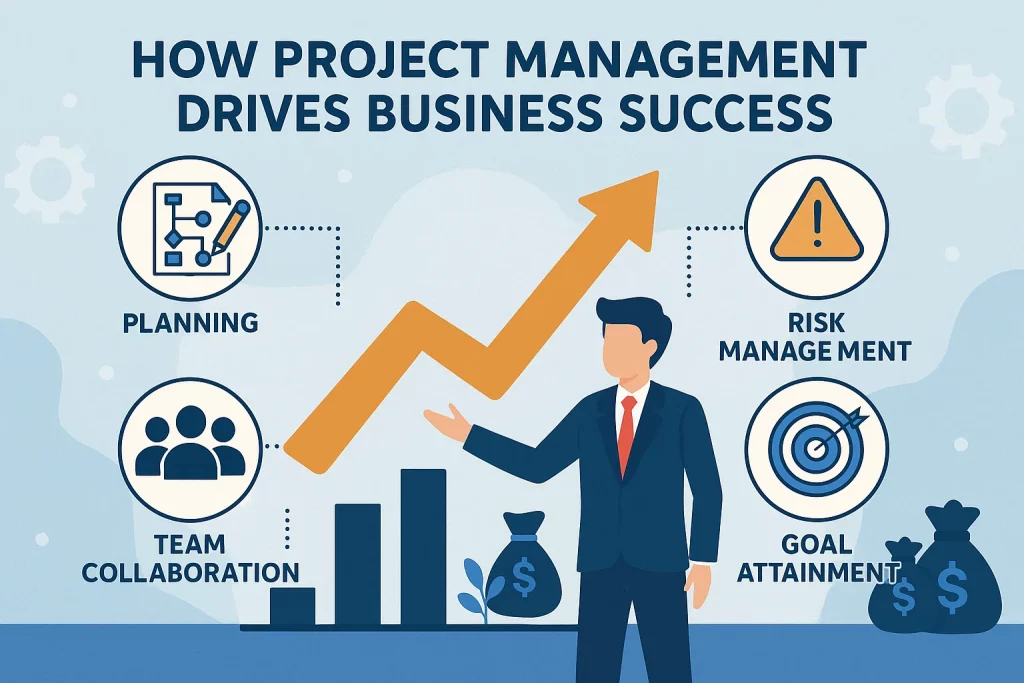
In today’s competitive business environment, completing projects on time and within budget is critical for success. Whether you’re launching a product, implementing a new system, or managing a team initiative, effective project management is essential.
Without proper planning and execution, projects can easily fail, leading to wasted time, money, and resources. This guide will walk you through key project management strategies that help ensure successful business outcomes.

What Is Project Management?
Project management is the process of planning, organizing, and managing resources to achieve specific goals within a defined timeframe.
Key Elements:
- Defining objectives
- Planning tasks
- Managing resources
- Monitoring progress
- Delivering results
Effective project management ensures that projects are completed efficiently and successfully.
Why Project Management Is Important
Project management plays a crucial role in business success.
Key Benefits:
- Improves efficiency
- Reduces risks
- Ensures timely delivery
- Enhances team collaboration
- Controls costs
Organizations that use strong project management strategies are more likely to achieve their goals.
Key Phases of Project Management
Understanding the project lifecycle is important.
1. Initiation
- Define the project goals
- Identify stakeholders
- Determine feasibility
2. Planning
- Create a detailed plan
- Set timelines and budgets
- Assign responsibilities
3. Execution
- Implement the plan
- Manage the team
- Monitor progress
4. Monitoring and Control
- Track performance
- Identify issues
- Make adjustments
5. Closure
- Complete the project
- Evaluate results
- Document lessons learned

Top Project Management Strategies
Let’s explore practical strategies for successful project management.
1. Set Clear Objectives
Clear goals are the foundation of any successful project.
Tips:
- Define specific outcomes
- Align goals with business objectives
- Use measurable targets
Clear objectives guide the entire project.
2. Create a Detailed Plan
Planning is one of the most important steps in project management.
Include:
- Tasks and milestones
- Deadlines
- Resource allocation
A well-structured plan reduces uncertainty and improves efficiency.
3. Define Roles and Responsibilities
Every team member should know their role.
Benefits:
- Reduces confusion
- Improves accountability
- Enhances teamwork
Clear responsibilities ensure smooth execution.
4. Use Project Management Tools
Technology can simplify project management.
Popular Tools:
- Task management software
- Collaboration platforms
- Scheduling tools
These tools help you track progress and stay organized.
5. Communicate Effectively
Communication is key to project success.
Tips:
- Hold regular meetings
- Provide updates
- Encourage feedback
Good communication prevents misunderstandings.
6. Manage Risks Proactively
Every project has risks.
Steps:
- Identify potential risks
- Assess their impact
- Develop mitigation plans
Proactive risk management reduces surprises.
7. Monitor Progress Regularly
Tracking progress helps you stay on schedule.
Methods:
- Use performance metrics
- Review milestones
- Adjust plans as needed
Regular monitoring keeps the project on track.
8. Stay Flexible
Projects rarely go exactly as planned.
Why Flexibility Matters:
- Helps adapt to changes
- Improves problem-solving
- Keeps the project moving
Being flexible is a key project management skill.
9. Focus on Team Collaboration
A strong team is essential for success.
Tips:
- Encourage teamwork
- Support team members
- Resolve conflicts quickly
Collaboration improves productivity and outcomes.
10. Manage Time Effectively
Time management is critical in project management.
Tips:
- Set realistic deadlines
- Prioritize tasks
- Avoid delays
Good time management ensures timely delivery.
11. Control Costs
Budget management is essential.
Tips:
- Track expenses
- Avoid unnecessary costs
- Adjust budget when needed
Keeping costs under control improves profitability.
12. Evaluate and Learn
After completing a project, review the results.
Ask:
- What went well?
- What can be improved?
Learning from experience improves future projects.
Common Project Management Challenges
Understanding challenges helps you prepare better.
Scope Creep
Uncontrolled changes to project scope.
Solution: Clearly define scope and manage changes.
Poor Communication
Leads to misunderstandings.
Solution: Maintain regular communication.
Lack of Planning
Results in confusion and delays.
Solution: Invest time in detailed planning.
Resource Constraints
Limited resources can slow progress.
Solution: Allocate resources wisely.
Missed Deadlines
Delays affect project success.
Solution: Monitor progress and adjust plans.
Project Management Methodologies
Different methodologies can be used depending on the project.
Waterfall
- Linear approach
- Best for structured projects
Agile
- Flexible and iterative
- Ideal for dynamic projects
Scrum
- Agile framework
- Focuses on teamwork and short cycles
Lean
- Focuses on efficiency
- Eliminates waste
Choosing the right methodology improves project outcomes.
Benefits of Effective Project Management
Improved Efficiency
Tasks are completed faster and more effectively.
Better Resource Utilization
Resources are used wisely.
Higher Success Rate
Projects are more likely to succeed.
Stronger Team Performance
Teams work better together.
Increased Customer Satisfaction
Delivering quality results builds trust.
Tips for Successful Project Management
Be Organized
Keep everything structured and clear.
Stay Focused
Avoid distractions and unnecessary tasks.
Be Proactive
Address issues early.
Keep Learning
Improve your project management skills continuously.
Project Management for Different Industries
IT Projects
- Use Agile methods
- Focus on flexibility
Construction Projects
- Use structured planning
- Emphasize timelines and budgets
Marketing Projects
- Focus on creativity
- Adapt to changing trends
Each industry requires a tailored approach.
Future Trends in Project Management
Project management continues to evolve.
Key Trends:
- Increased use of AI tools
- Remote team management
- Automation of tasks
- Data-driven decision-making
Staying updated with trends helps you stay competitive.
Final Thoughts
Effective project management is essential for achieving successful business outcomes. By using the right strategies, tools, and techniques, you can manage projects efficiently and deliver high-quality results.
Conclusion
Project management is more than just completing tasks—it’s about achieving goals, managing resources, and delivering value. By setting clear objectives, planning carefully, communicating effectively, and staying flexible, you can ensure project success.
Start applying these project management strategies today, and you’ll see improvements in productivity, teamwork, and overall business performance.